The Business Lifesystem
A practical methodology for understanding organisations as connected systems — and identifying where clarity, alignment and value are breaking down.
The Business Lifesystem helps leaders look beyond individual symptoms, projects and functions to understand how the whole organisation is working as a system.
It brings together purpose, strategy, priorities, people, process, technology, governance, commercial discipline, culture, capability and external context into one coherent view.
For NHS, healthcare and other complex organisations, this matters because the visible problem is rarely the whole problem. Stalled delivery, competing priorities, heavy governance, digital challenges or benefits that are not being realised are often symptoms of a wider system that has become disconnected.

Why organisations become harder to lead
Organisations rarely become complex by design. They evolve through years of decisions, initiatives, structures, systems, governance arrangements, workarounds and changing priorities.
Each change may make sense at the time, but over time the whole system can become harder to understand, harder to lead and harder to improve.
Business Lifesystem describes this as chaotic evolution: continuous change without enough clarity, alignment, deliberate design and control.
In NHS, healthcare and other complex organisations, this often shows up as competing priorities, heavy governance, stalled programmes, blurred accountability and benefits that are promised but not fully realised.
The methodology helps leaders understand how that complexity has developed, where alignment is breaking down and where focused intervention will create the greatest value.

The three layers of the Business Lifesystem
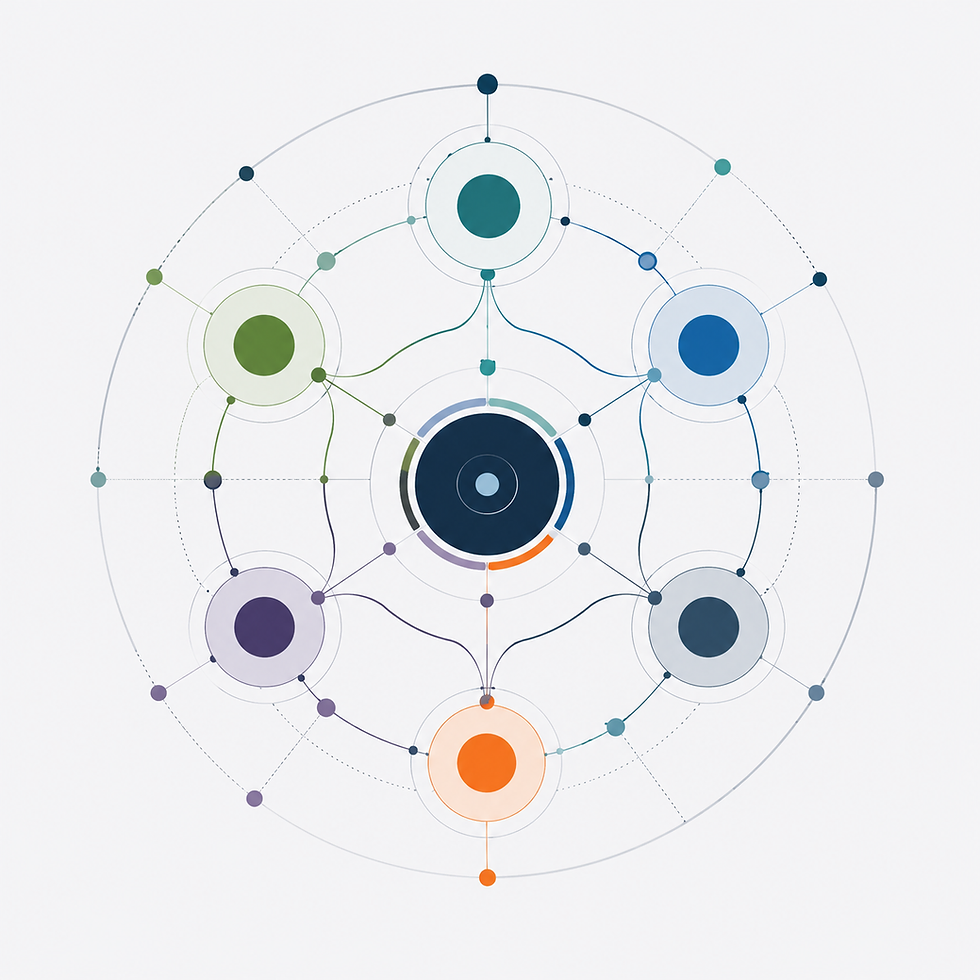
The Business Lifesystem looks at organisations through three connected layers:

-
What the organisation is built from - its Business DNA
-
How the organisation behaves - its culture and value drivers
-
The external forces acting on it - its operating environment
Together, these layers help leaders understand not just what is happening, but why it is happening and where intervention is most likely to create value.
Nature — the organisation’s DNA
The fundamental building blocks of the organisation: its customers, propositions, capability and finance. These define what the organisation exists to do, what it offers, what it needs to deliver and how value is created.

Nurture — the culture and value drivers
The values, leadership behaviours and cultural conditions that influence how the organisation makes decisions, collaborates, adapts, implements change and defines success.

Environment — the external context
The external forces that create opportunity, risk and pressure, including policy, regulation, economics, technology, workforce, competition, public expectations and emerging trends.

Nature —
Business DNA
The Business DNA layer describes the fundamental building blocks of the organisation: Customer, Proposition, Capability and Finance.
It looks at who the organisation serves, what those customers, patients or stakeholders need, the relationships the organisation depends on and the satisfaction or value it creates.
It also considers what the organisation offers, how that offer is developed and delivered, and the quality achieved in practice.
Capability describes the people, partners, assets, consumables, processes and systems required to deliver.
Finance describes expenditure, income, surplus or profit, and the value created from the resources available.
Together, these elements describe the nature of the organisation: what it is designed to do, what it needs to be good at, and how it creates value.
Nurture —
Culture and value drivers

Environment — External forces
No organisation operates in isolation. External forces create both opportunity and threat.
The Business Lifesystem environment layer helps leaders assess the external drivers that affect strategy, delivery, risk and value.
These external forces are assessed through the PERSPECTIVE framework, which considers the political, economic, regulatory, social, people, environmental, competitive, technological, innovation, emerging trend and ethical factors that shape strategy, delivery, risk and value.

Culture shapes how an organisation’s Business DNA is expressed in practice. Structures, processes, strategies and systems matter, but they do not operate in isolation.
They are filtered through leadership behaviour, collaboration, openness, creativity, implementation discipline and the organisation’s definition of success.
In complex NHS, healthcare and other delivery environments, this layer is often where formal plans meet operational reality. It influences whether priorities are genuinely shared, whether difficult issues are surfaced early, whether teams collaborate across boundaries and whether change is adopted in practice.
The CHOICES Framework helps assess the value drivers that influence how the organisation behaves, how decisions are made and how effectively change is delivered.

From understanding to focused action
The Business Lifesystem is not a fixed diagnostic checklist or a standard consulting product. It is a way of understanding how an organisation is working as a connected system, so leaders can decide where focused intervention is most likely to create the greatest value.
In NHS, healthcare and other complex organisations, the visible problem is often only the starting point. The real issue may sit in strategy, governance, culture, delivery, digital change, supplier alignment, benefits realisation or the way priorities are being managed.
.png)
See the whole system
Organisational problems rarely sit neatly in one place. A delivery issue may be rooted in strategy, governance, culture, capability, supplier alignment, commercial pressure or unclear accountability.

Start where the problem shows up
The starting point will vary. One organisation may see a cultural problem. Another may be struggling with stalled delivery, weak governance, unclear priorities, poor benefits realisation or supplier performance.

Find the alignment gap
Often, the deeper issue is a lack of alignment. Projects and programmes are launched without a clear enough link to strategy. Priorities compete, governance focuses on activity rather than value, and resources are stretched across too many initiatives.

Focus intervention where it matters
The methodology helps leaders look beneath the presenting symptoms, understand the wider system and decide where intervention will create the greatest improvement.